
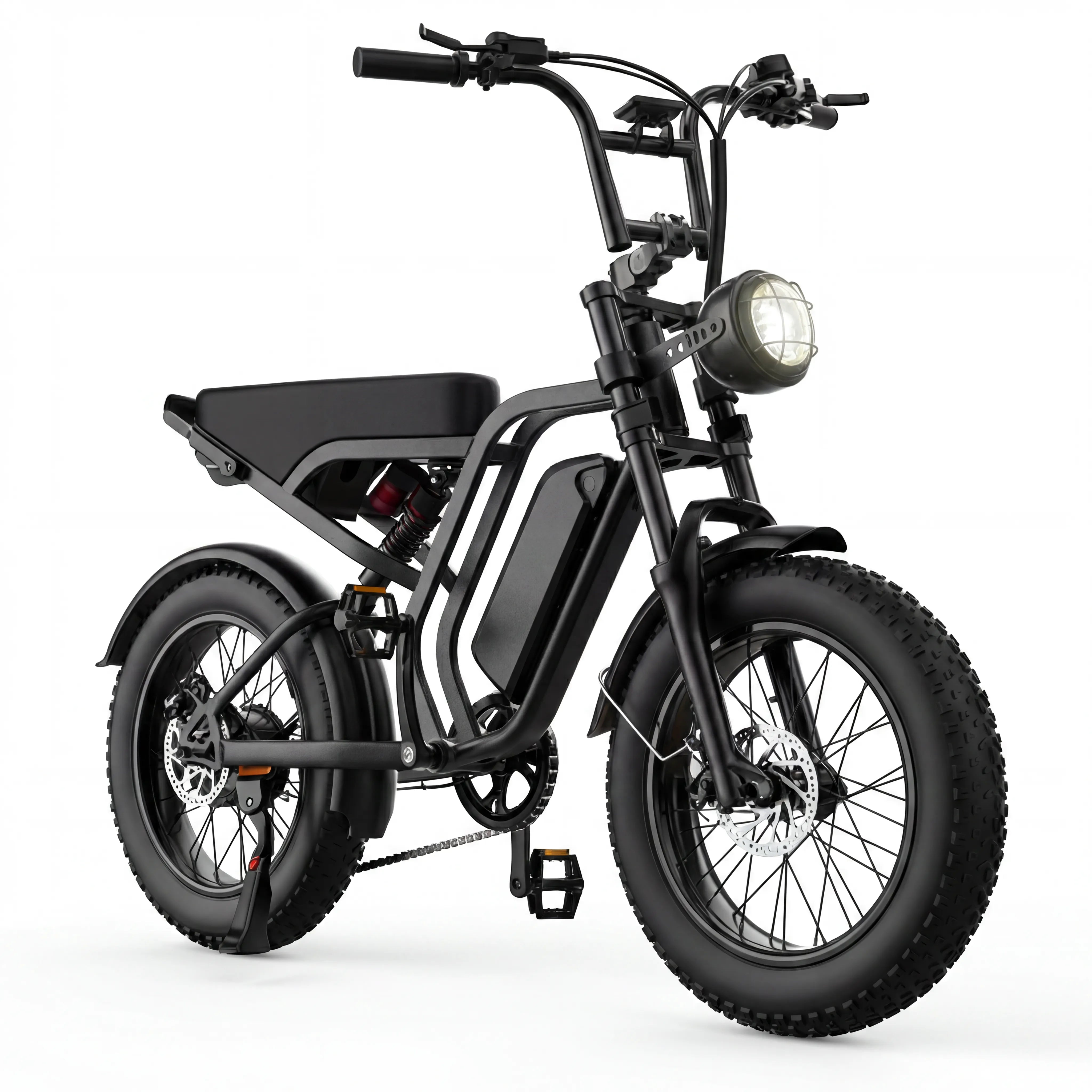
Quick answer: A fat tire E-Bike is usually the better fit for recurring gravel, loose sand, packed snow, broken pavement, and riders who value a planted, cushioned feel. A regular-width tire E-Bike usually makes more sense for maintained pavement, longer paved commutes, lighter handling, carrying, and compact storage. Tire width is only one part of the decision—tread, pressure, bike weight, suspension, fit, and rider experience also matter.
Key takeaways
- Choose for the surface you ride most often, not the most extreme route you might ride once.
- Fat tires add volume and surface contact, but usually make the complete bike larger and heavier.
- Regular-width tires often feel more responsive and practical for paved commuting.
- Check storage, transport, replacement-tire access, and total bike weight before buying.
In this guide
- At-a-glance comparison
- Which tire fits each surface
- Comfort, handling, and experience
- Commuting and ownership
- Where the HIEHA SU8 fits
What is a fat tire E-Bike?
“Fat tire” generally describes a high-volume tire that is visibly wider than a conventional commuter or mountain-bike tire. Many fat tire E-Bikes use tires around four inches wide. Regular tire E-Bikes cover a broad middle ground, from narrow road-focused tires to wider commuter and mountain-bike options.
That means this is not a simple two-category choice. A moderately wide tire with the right tread may provide enough comfort and grip for a pavement-focused rider without the bulk of a full fat tire setup.
Fat tire vs. regular tire E-Bike at a glance
| Decision | Fat tire E-Bike | Regular tire E-Bike |
|---|---|---|
| Pavement | Comfortable, but often heavier and less lively | Usually more efficient and responsive |
| Gravel | Added volume can improve comfort and confidence | Capable with suitable width, tread, and pressure |
| Loose sand | Better flotation when conditions and setup allow | More likely to dig in or wander |
| Packed snow | Wider contact can help; correct tread still matters | Less flotation; winter-specific tires may matter more |
| Comfort | More air volume can soften small impacts | Depends more on tire volume, pressure, fit, and suspension |
| Handling | Planted but can feel slower or heavier | Often quicker and more familiar |
| Bike weight | Complete bikes are commonly heavier and bulkier | Often easier to lift and transport |
| Storage | Needs wider rack channels and more room | Usually easier in apartments and tight storage |
| Maintenance | Exact tires/tubes may be less common locally | Common sizes may be easier to source |
| Paved commute | Best when rough sections justify the tradeoff | Strong choice for longer, smoother routes |
These are tendencies, not guarantees. Tire casing, tread, pressure, wheel size, frame geometry, suspension, and the complete bike design can change the result.

Which tire fits your surface?
Maintained pavement
For a mostly smooth commute, a regular-width commuter tire usually offers the cleaner tradeoff. It often reduces rotating weight and rolling resistance and can make the bike easier to pedal with low or no assist.
A fat tire can still work well on pavement, especially when comfort is a priority or the route includes broken shoulders. The question is whether those benefits justify the bike’s added size and weight every day.
Gravel and rough roads
Fat tires provide more air volume and can feel calmer over washboard, loose gravel, and patched pavement. A regular tire with suitable width and tread can still be a good choice on maintained gravel, particularly for riders who want a lighter bike.
Do not judge by width alone. Incorrect pressure or unsuitable tread can make either tire feel vague or harsh.
Loose sand
Wider tires can spread the load over a larger area and reduce the tendency to sink into loose sand. They do not make every sandy route rideable. Deep, dry sand can stop or deflect any bicycle, and a rider may need to slow down, dismount, or choose a firmer line.
If sand is only an occasional hazard, it may not justify carrying a fat tire bike through the rest of the year.
Snow and winter surfaces
Fat tires can provide useful flotation on packed snow when paired with suitable tread and pressure. Width does not create grip on ice. Ice, freeze-thaw surfaces, and polished snow may require winter-specific equipment, reduced speed, or avoiding the route entirely.
Check local conditions and the bike and tire manufacturers’ guidance before winter riding. No tire makes an E-Bike automatically safe in snow.
Comfort, handling, and rider experience
Comfort
More tire volume can absorb small bumps, while suspension can help manage larger impacts. Comfort also depends on bike fit, saddle position, riding posture, and pressure.
If possible, test both formats on a surface similar to your route. A short showroom ride on smooth pavement will not reveal how either bike feels on rough shoulders or gravel.
Handling
Fat tire bikes often feel planted at moderate speeds. Some riders appreciate that stability; others notice heavier steering or more effort when changing direction.
Regular-width tires often feel quicker and more bicycle-like. Experienced cyclists may prefer that feedback, while a new rider may initially prefer the visual and physical presence of a wider tire. Neither response is universal, so fit and a controlled test ride matter.
Rider experience
New riders should not treat tire width as a substitute for skill. Practice starting, stopping, turning, scanning, and using assist in a low-traffic area. A heavier bike can require more deliberate low-speed control, especially when parking, walking it up a ramp, or recovering from a lean.
Commuting, storage, and maintenance
Commuting distance
For a long paved commute, the regular tire bike’s lighter, more responsive feel may matter on every mile—especially if the battery runs low or you prefer lower assist.
A fat tire bike can make sense when the same commute repeatedly includes gravel, damaged pavement, or rough shoulders. Choose for the route you ride five days a week, not a hypothetical weekend trail.
Bike weight and transport
Compare total bike weight, wheelbase, tire width, and dimensions. If you must climb stairs, use an elevator, load a vehicle, or combine riding with transit, physically rehearse that task before buying.
For car racks, confirm the rack’s approved total weight, tire channel width, wheelbase, and E-Bike compatibility. Removing a battery may reduce lifting weight on some models, but follow both manufacturers’ transport instructions.
Storage
Measure doorways, hallways, rack channels, elevator space, and the final parking area. Fat tires may not fit narrow floor stands or wall hooks. Also confirm that the storage location is appropriate for the battery and charger.
Maintenance and replacement parts
Before purchase, check whether the exact tire and tube size is available and who can service the wheels, brakes, and electrical system. Fat tires can require more storage space for spares and may be less common at a nearby bike shop.
Maintain pressure within the tire and bike manufacturers’ approved range. Too little pressure can cause vague steering or damage; too much can reduce comfort and grip. HIEHA lists model-specific items in its E-Bike accessories collection, but compatibility must be confirmed before ordering.
A route-first decision checklist
Choose a fat tire E-Bike when most of these are true:
- rough pavement, gravel, sand, or packed snow is a recurring part of the route;
- comfort and a planted feel matter more than low weight;
- you have ground-level or spacious storage;
- your rack and service options support the exact bike and tire size;
- you accept that the complete bike may feel heavier without motor support.
Choose a regular tire E-Bike when most of these are true:
- most miles are on maintained pavement;
- you carry the bike, use transit, or have tight storage;
- responsive handling and easier unpowered pedaling are priorities;
- common replacement sizes and broad local service access matter;
- rough or loose surfaces are occasional rather than routine.
Two real-world examples
Mixed-surface suburban commute: A 12-mile round trip includes patched shoulders and two miles of maintained gravel. The rider has garage storage and does not lift the bike. A fat tire setup may be a sensible comfort-first match.
Apartment-to-office commute: A 16-mile round trip is almost entirely smooth pavement, but the rider carries the bike up stairs and uses a narrow rack. A lighter regular tire commuter is likely the more practical daily choice.
Where the HIEHA SU8 fits
HIEHA’s SU8 models use 20 × 4-inch fat tires and full suspension, placing them on the comfort- and mixed-surface side of this comparison. The HIEHA E-Bike collection compares the available SU8 configurations.
The SU8 1.0 uses a standard LCD setup. The SU8 2.0 adds a touchscreen, app support, and front and rear cameras. Product facts confirm an 80-pound listed weight for the SU8 1.0; verify the exact configuration, dimensions, fit, and current availability before purchase.
An SU8 is worth considering when fat-tire volume, full suspension, and a moped-style layout match your recurring route—and when storage and transport are already solved. If low lifting weight or compact storage is essential, compare other E-Bike formats before deciding.
See whether the format fits your day: compare the SU8 models, measure your storage and transport limits, and review HIEHA’s E-Bike setup and support guidance before choosing a configuration.
The bottom line
Fat tires are not an automatic upgrade, and regular tires are not limited to perfect pavement. Choose the complete E-Bike that handles your most common surface, commute, storage, and maintenance needs with the fewest daily compromises.
\nIf a puncture interrupts a ride, use this calm e-bike flat-tire roadside checklist to decide what to inspect and when to arrange pickup.
\n
Share:
How Far Can an Electric Bike Go? A Practical Range Guide