
Quick answer: How far an electric bike can go depends on battery capacity, assist level, speed, hills, total load, wind, temperature, stops, and tire setup. A published range is a comparison point—not a guaranteed trip distance. For dependable planning, measure battery use on your own route, calculate a projected range, and leave a reserve for changing conditions.
Key takeaways
- Battery size matters, but it does not convert to a fixed number of miles.
- Higher assist, higher speed, climbs, headwinds, cold weather, and heavier loads generally use energy faster.
- Your best estimate comes from repeated rides on the route you actually use.
- Plan a reserve rather than treating an empty battery as the finish line.
In this guide
- What affects E-Bike range
- How to estimate your real range
- Why advertised range can differ
- How to choose for your route
What affects electric bike range?
An E-Bike uses more battery when the motor must work harder or provide support for longer. These are the variables most likely to change your result.
Battery capacity
Battery labels usually show voltage (V) and amp-hours (Ah). Multiplying the two gives nominal watt-hours (Wh), a useful way to compare stored energy. For example, 48V × 15Ah equals 720Wh.
Watt-hours do not predict exact mileage. The controller, motor efficiency, battery condition, temperature, and riding conditions all affect how much of that energy becomes useful distance.
Assist level, throttle use, and rider input
Higher pedal assist asks the motor to contribute more. Frequent throttle use can also drain the battery faster than steady pedaling at a lower support level.
Use extra support where it provides real value—starting, climbing, or managing a headwind—then reduce it on easier sections if you need more range.
Speed and stop-and-go riding
Riding faster increases air resistance. Repeated hard starts also require more energy than maintaining a moderate, consistent pace.
A flat urban route with a stop every block may use more battery than an uninterrupted path of the same distance.
Hills, wind, and road surface
Long climbs, headwinds, loose gravel, soft ground, and rough surfaces increase the work required from the motor. Check the return direction as well as the outbound trip: a downhill morning ride can become an uphill ride home.
Rider, cargo, and bike weight
The motor must move the combined weight of the bike, rider, cargo, lock, and accessories. More total weight is especially noticeable during acceleration and climbing. Always remain within the bike and accessory manufacturers’ load limits.
Tires and tire pressure
Tire width, tread, construction, pressure, and surface all affect rolling resistance. Underinflated tires can feel sluggish; excessive pressure can reduce comfort and grip. Use the approved range on the tire sidewall and the bike manufacturer’s guidance rather than a universal pressure number.
Temperature and battery condition
Cold conditions can temporarily reduce available battery performance. Age, storage, and battery condition matter too. Use the specified charger and stop using a battery that is damaged, swollen, leaking, unusually hot, or producing an abnormal odor.

How to estimate your real-world range
The most useful estimate is based on a representative ride, not a generic online calculator.
Method 1: Project from a test ride
- Charge the battery according to the manufacturer’s instructions.
- Ride a familiar route with your normal cargo, assist level, and pace.
- Record miles traveled and the displayed battery percentage used.
- Divide miles traveled by the decimal form of battery used.
- Repeat the test under similar conditions before relying on the result.
Example: You ride 12 miles and the display indicates that you used 30% of the battery.
12 miles ÷ 0.30 = 40 miles projected range
That 40-mile result is a planning estimate, not a promise. Battery displays are not laboratory instruments, and wind, hills, temperature, or a detour can change the next ride. Keep a meaningful reserve instead of scheduling a routine trip all the way to the projected limit.
Method 2: Plan a new route before you can test it
If you do not own the bike yet, start with the manufacturer’s range and ask what conditions produced it. Then compare those conditions with your route:
| Route factor | More range-friendly | More energy-intensive |
|---|---|---|
| Assist | Lower support with steady pedaling | Sustained high assist or throttle use |
| Terrain | Flat, firm, smooth | Long climbs, loose or soft surfaces |
| Pace | Moderate and consistent | Higher speed and repeated hard starts |
| Load | Lighter total load | Rider plus heavy cargo or accessories |
| Weather | Mild temperature, light wind | Cold conditions or headwind |
| Stops | Long uninterrupted sections | Frequent intersections and restarts |
If several factors fall in the right-hand column, plan from the conservative end of the stated range. If the trip would consume nearly all of that estimate, the setup does not offer enough planning margin.
A commute example
Consider a 10-mile ride to work and 10 miles home. The distance is 20 miles, but the decision should include:
- elevation in both directions;
- a laptop, groceries, or other regular cargo;
- stop frequency and exposed windy sections;
- colder seasonal conditions;
- a possible errand or detour;
- whether approved charging is available at work.
Test the full round trip—not just the easier half. If repeated rides leave a comfortable reserve, the route is a realistic match under similar conditions. If they regularly finish near empty, reduce energy use or choose more battery flexibility.
Advertised range vs. real-world range
Manufacturers often publish a range because riding conditions vary. A low-assist ride with active pedaling on a flat route is not equivalent to a high-assist ride on hills at higher speed.
Use advertised range to compare candidates, then verify:
- battery capacity;
- whether the estimate assumes pedaling or a particular assist level;
- terrain, load, speed, and temperature conditions;
- whether the number is a maximum, a range, or a tested result;
- whether an extra battery is included or optional.
Be cautious with a single large mileage claim that does not explain its assumptions.
How to get more range from each charge
- Use lower assist on easy sections and save higher support for climbs and starts.
- Accelerate smoothly and choose a moderate pace when conditions allow.
- Check tire condition and pressure before a longer ride.
- Remove cargo you do not need while staying within every load limit.
- Choose a flatter or less stop-heavy route when practical.
- Keep the brakes and drivetrain properly adjusted.
- Charge and store the battery according to its manual.
Do not trade away safe handling, visibility, or an appropriate road speed just to extend range.
Choosing an E-Bike for your route
Work backward from the trip you need to complete. Record round-trip distance, hills, cargo, storage, charging access, and the reserve you want. Then compare battery capacity and conditional range—not the headline mileage alone.
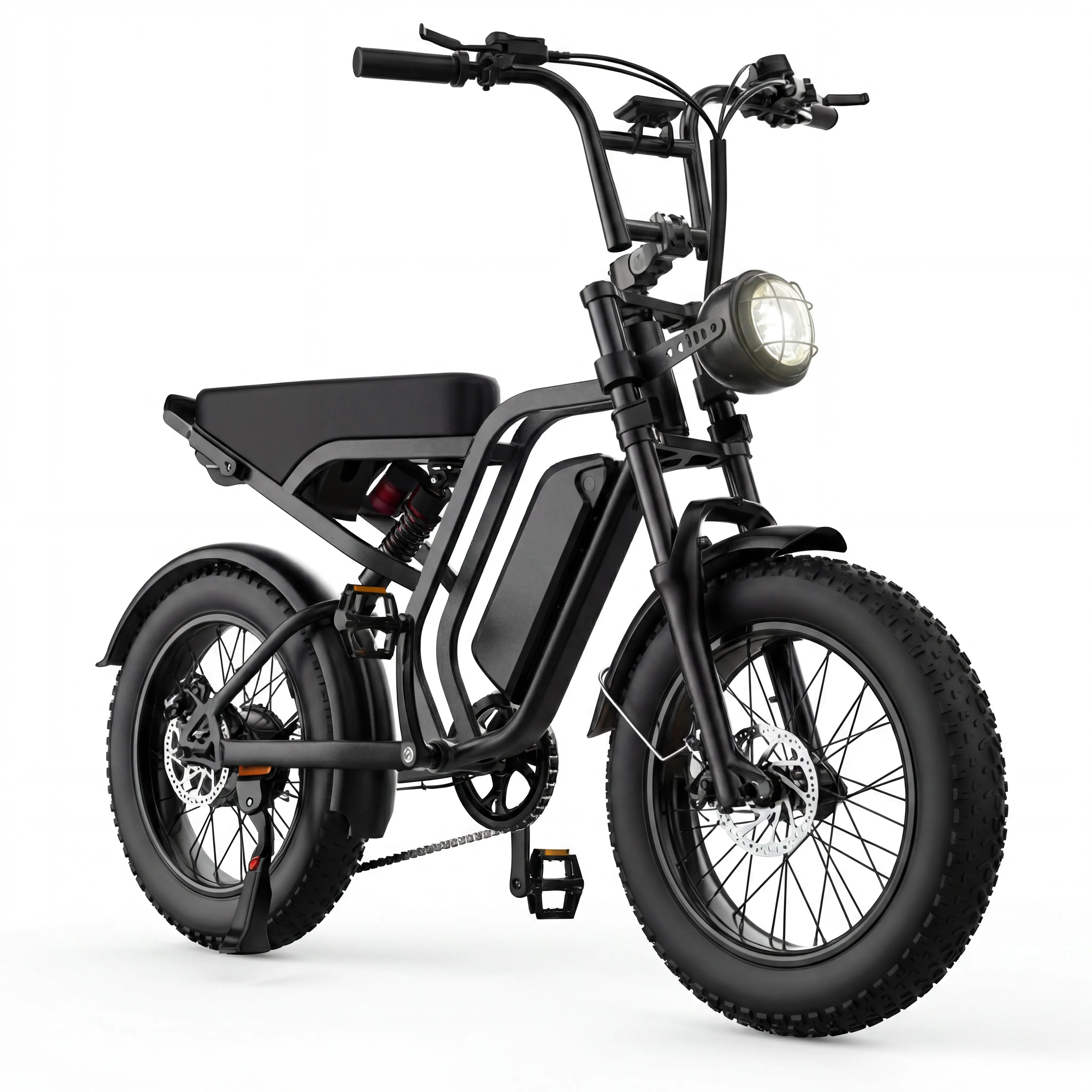
The HIEHA E-Bike collection lists the SU8 1.0 and SU8 2.0 with 48V 15Ah removable batteries. HIEHA publishes an estimated 40–70-mile range and notes that rider weight, terrain, speed, assist level, temperature, and road conditions affect the result. That range should be treated as conditional, not guaranteed.
The SU8 1.0 provides the standard LCD setup. The SU8 2.0 adds a touchscreen, app support, and front and rear cameras. HIEHA also lists an SU8 2.0 bundle with an extra original battery for additional battery flexibility; it should not be assumed to guarantee twice the mileage.
Ready to compare the options? Review the SU8 models against your route, then use HIEHA’s E-Bike battery and setup guidance to confirm charging, compatibility, and support details before deciding.
The bottom line
The honest answer to “How far can an electric bike go?” is route-specific. Use battery capacity and the manufacturer’s estimate as a starting point. Then test your actual route, calculate projected range from repeated rides, and retain a reserve. That gives you a more useful answer than any maximum-mileage headline.
Before charging for a planned ride, review our practical guide to charging an electric bike battery for a routine that starts with the supplied or manufacturer-approved charger.
Range is one part of the decision. For a broader checklist covering fit, weight, storage, service support, and daily use, see what to look for when buying an electric bike.
If a familiar route suddenly uses more battery than expected, follow our E-Bike range troubleshooting guide to compare conditions and rule out simple causes before your next ride.
Share:
Fat Tire vs. Regular Tire E-Bikes: Which Fits Your Ride?
How Long Does an E-Bike Battery Last? Care and Replacement Guide