
Intersections ask more of an e-bike rider than simply continuing forward. Cars may be turning, people may be walking, sightlines may be limited, and a signal may be changing while you are still deciding what to do. A good crossing is not about forcing a gap or proving confidence. It begins with arriving early enough to see the situation, understand the choices, and stop without drama.
This checklist is intentionally model-neutral. Use the current owner’s manual for your exact controls, warnings, and inspection steps. Follow the rules that apply where you ride; traffic laws, e-bike access rules, lane rules, and sidewalk rules can differ by place. If a crossing feels busy, confusing, or beyond your present comfort, the sensible choice is to wait, change the route, or walk the bike where that is lawful and appropriate.
Plan the crossing before you are at its edge
Give an unfamiliar intersection a little attention while you are still well back from it. Notice whether the route continues straight, turns, joins a path, or requires a different crossing choice. Identify the signs, markings, signals, curb cuts, driveways, parked vehicles, and people using the space. This is not the moment to study a map, adjust a display, or make a last-second route decision.
A route can be technically shorter yet ask for more judgment than you want to make today. A route plan is useful before departure; this checklist begins once a crossing is actually in front of you. If you cannot understand the layout with enough time to slow down, continue only when a lawful, low-pressure option is clear.
Start with a ready rider and a ready bike
Do the preparation before you approach traffic. Wear a helmet that fits and fastens as its maker directs, and use the helmet-fit checklist when you need a calm reminder about position, straps, and condition. Secure loose clothing, bags, and anything that could take attention from the road. Put the phone away rather than trying to read a notification at a red light.
Before starting the ride, follow the manual’s pre-ride instructions and make the observations in the e-bike brake check before riding. This is not a test of braking distance or a substitute for service. It is a reason to pause if a lever feel, warning, rubbing sound, tire condition, steering response, or other detail seems unfamiliar. Do not head toward traffic hoping the concern will explain itself later.
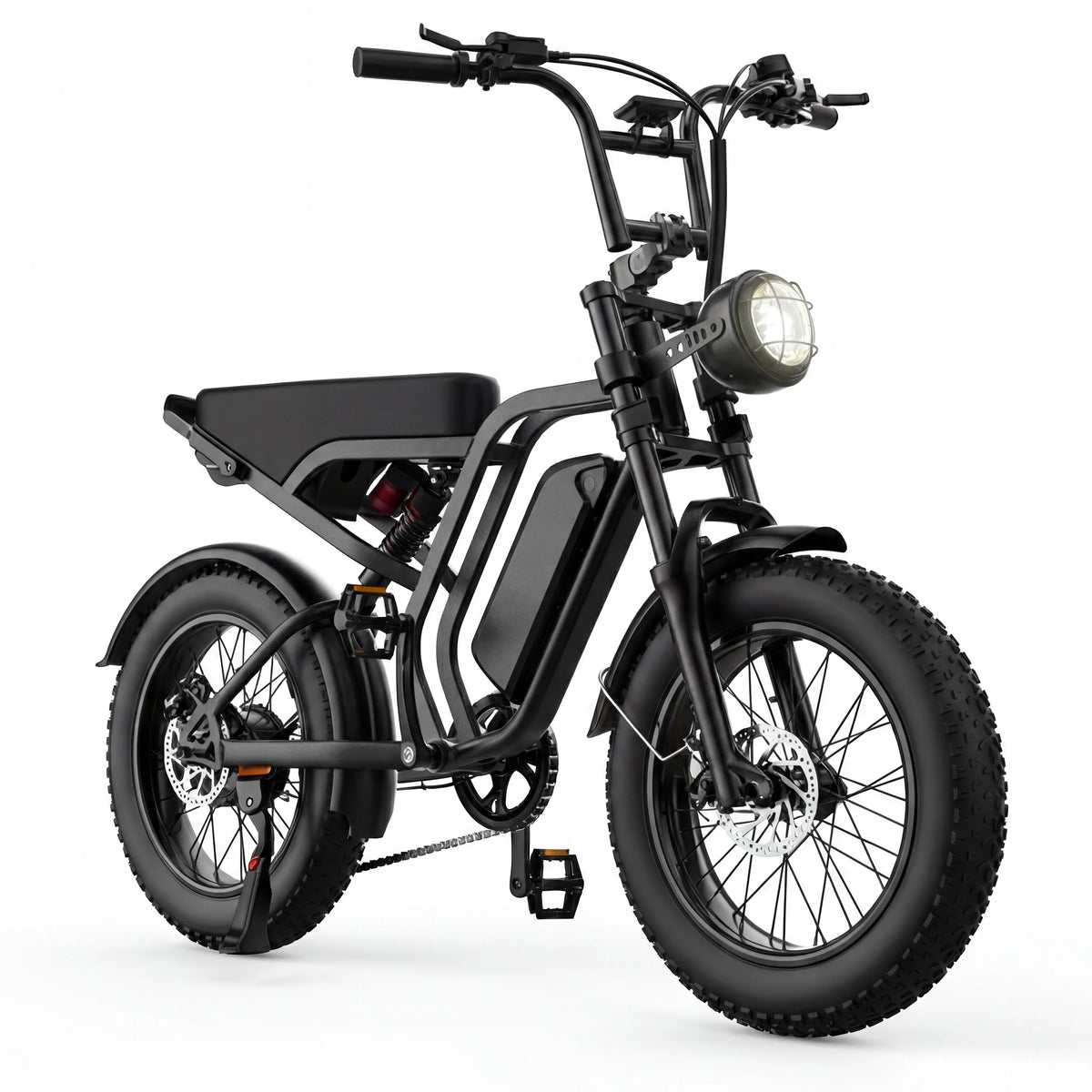
Review the model information available through the HIEHA e-bike collection and the current page for your own bike, such as the HIEHA SU8 1.0. Those pages can help you identify a model and support path, but the current manual remains the source for model-specific operation and warnings.
Approach at a pace that leaves room to decide
As the intersection gets closer, look ahead and reduce the pressure to act quickly. NHTSA advises riders to stay focused, look ahead for hazards and conflicts, and ride predictably. Leave enough space that you can obey the sign or signal, yield when required, and stop before entering if the picture changes. A calm approach gives you time to notice a vehicle turning, a person near the curb, a door opening, or an unexpected surface issue.
Keep a steady, understandable line instead of weaving around parked cars, pedestrians, or lane edges to gain a few seconds. Avoid distractions that take your eyes, ears, or mind away from the road. If a driver appears to be waiting, turning, backing, or searching for a space, do not treat eye contact, a wave, or a vehicle’s position as a guarantee. Continue only after you have a legal, clear, and comfortable decision.
Read the signs and signals that apply to you
Road signs, signals, pavement markings, and local rules determine what a rider must do at a particular crossing. Read them as you approach; do not assume yesterday’s familiar route has the same control or access arrangement as today’s. When there is a stop requirement, come to a complete stop in the position required by local rules. When a signal controls your movement, wait for the signal that applies to you and remain alert as the scene changes.
Hand signals and a look behind can help communicate an intended turn or lane-position change where they are lawful and safe to make. Practice those skills away from traffic first. The low-speed practice checklist offers a traffic-free setting for becoming familiar with starting, stopping, looking ahead, and broad turning. It is not an intersection drill and does not replace an on-bike class when you need coaching.
Scan for the conflicts that are easy to miss
Before entering, scan the space you will cross and the places that can feed into it: turning traffic, vehicles waiting to pull out, people in crosswalks, other riders, driveway traffic, and surface hazards. NHTSA specifically encourages riders to anticipate what others may do and to slow and look for traffic when crossing from a sidewalk. Keep looking as you cross; a clear view at the curb is not a promise that it will remain clear.
Expect that other road users may not have noticed you. That is not a reason to freeze in a conflict area; it is a reason to approach with enough margin that you can choose a safer response before entering. Avoid trying to squeeze beside a vehicle, accelerate to beat a changing scene, or follow another person into a space you have not assessed for yourself.
Make turns as a separate decision
A turn combines signs, signals, traffic movement, path users, surface conditions, and your own control of the bike. If you are not sure how a turn is handled under local rules, do not invent a shortcut while rolling. Stop where required, choose another lawful route, or dismount and walk the bike only where that is permitted and makes sense. The correct choice can be slower than the one you expected when you left home.
Keep the turn simple and predictable. Look for people and traffic that may cross your intended path, signal where appropriate, and do not make a sharp movement just because the gap seems temporary. Be especially patient near driveways, parking-lot entrances, painted surfaces, loose debris, and areas with limited visibility. There is no prize for completing a turn before you have a clear plan.
Use extra care near sidewalks and shared paths
Sidewalk and path access rules vary, so confirm what is allowed locally. NHTSA notes that drivers may not expect fast-moving traffic on a sidewalk and advises riders who cross from one to slow down, look for traffic, be prepared to stop, and follow pedestrian signals. Reduce speed for people walking and never use a sidewalk or crosswalk as a way to surprise a driver who is turning or leaving a driveway.
Where a trip joins a multiuse path, switch from traffic scanning to the separate task of sharing space with other people. The shared-path etiquette checklist covers that context. Do not carry a traffic maneuver’s urgency onto a path; slow down, watch for people, and choose courtesy over momentum.
Choose the reset when the crossing is not right today
Stopping is an active decision, not a failure. Pause when you cannot see well enough, the signal phase is unclear, traffic is behaving unpredictably, the crossing has multiple lanes you are not ready to manage, or your attention has slipped. Move to a safe, lawful place before checking directions or a phone. If necessary, take a different route, wait for conditions to change, or end the ride.
If you are learning these skills, seek a qualified local class or instructor rather than trying to turn a difficult intersection into practice. A few calm sessions in a traffic-free area and a carefully chosen first route can create more useful experience than repeated attempts at a crossing that already feels overwhelming.
An e-bike intersection checklist
| Before the approach | At the crossing | When conditions change |
|---|---|---|
| Know the route, local rules, and the signs or signals you expect to encounter. | Slow early, look ahead, and leave room to stop before entering. | Wait, reroute, or use a lawful walking option if the decision is unclear. |
| Use the manual’s pre-ride steps and arrive with gear and controls sorted out. | Follow the control that applies to you; scan for vehicles, people, and surface hazards. | Do not force a gap, guess at right of way, or rely on another person’s gesture. |
| Keep the phone away and secure loose items before traffic demands attention. | Make a turn only when you have a legal, visible, and comfortable plan. | Get qualified instruction when basic traffic decisions do not yet feel manageable. |
The aim of this checklist is not to make every intersection feel routine. It is to make the next decision more deliberate: arrive with room, read what applies, scan for change, and choose the reset whenever certainty is missing. That approach respects the people sharing the road and gives you more chances to finish a ride with attention still intact.
Before the next crossing, this e-bike door-zone checklist can help you scan the parked-car space leading into an intersection and choose a steadier approach.
Share:
E-Bike Low-Speed Practice Checklist: Build Confidence Before Traffic
E-Bike Hand-Signal Checklist: Practice Turns Before Traffic