
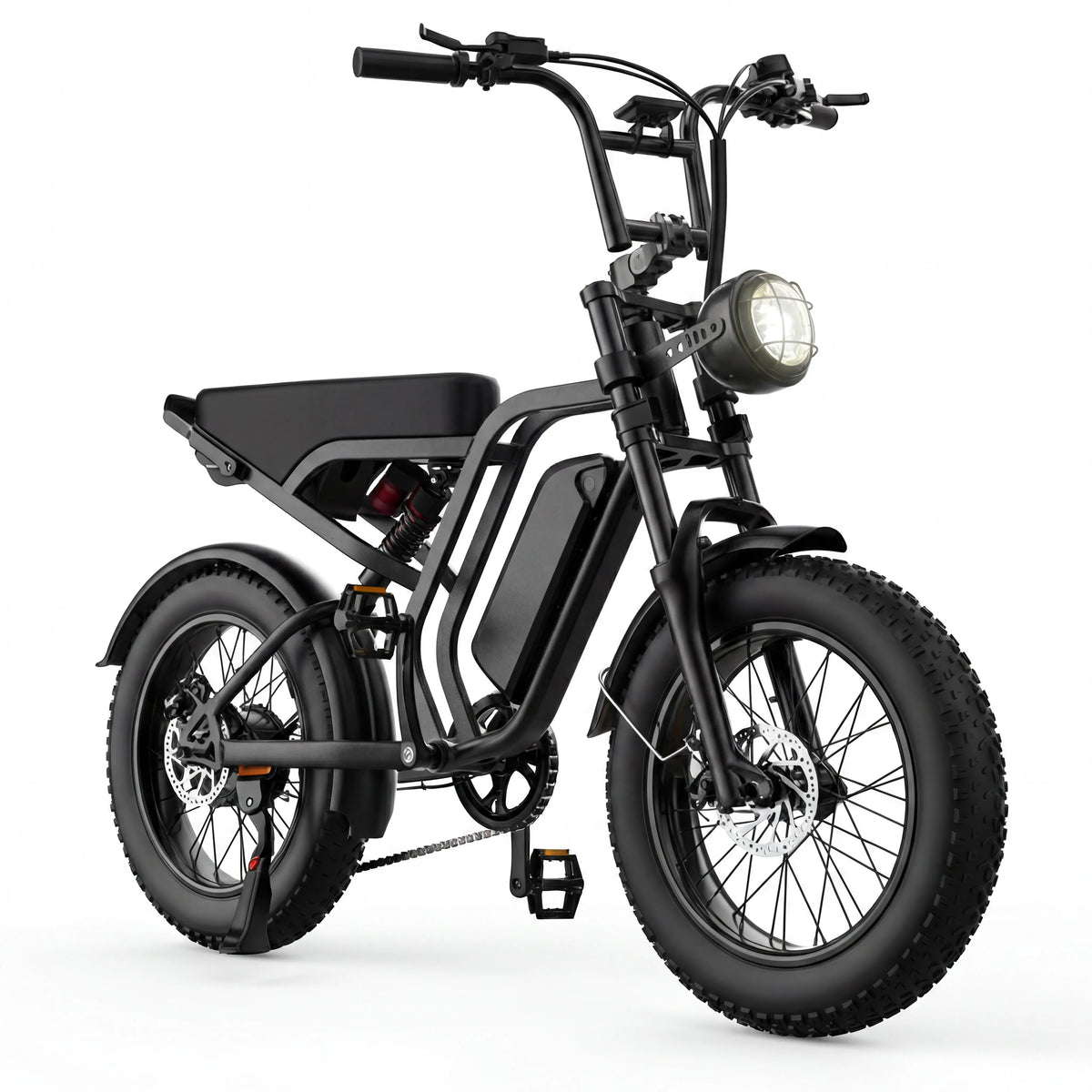
A shared path can make an e-bike trip feel relaxed: there is room to ride away from most vehicle traffic, connect a neighborhood to a park, or finish a commute on a greenway. It is still a place where people moving at very different speeds need room, predictability, and patience. A person walking a dog, a runner wearing headphones, a child learning to ride, a wheelchair user, and another cyclist may all be using the same stretch.
This checklist is not a substitute for the rules where you ride. E-bike access, speed expectations, and passing rules can differ by trail, city, park, property owner, and season. Read the signs at each entrance, check the responsible local authority when the rule is unclear, and choose another route if e-bikes are not allowed. Once access is clear, use the routine below to make each shared-path ride calmer for everyone.
Start with the right expectation
A shared path is not a place to test a top speed or make up time. Its character can change quickly: an empty early-morning section may become busy around a playground, trailhead, crossing, scenic overlook, or transit stop. Decide before entering that the pace will match what you can see, the space available, and the people ahead—not the capability of the bike.
Use the path only after confirming your bike is ready for the ride. A short brake check before riding helps make a stop feel predictable, and this HIEHA e-bike collection is a useful starting point for finding the model-specific manual and support information that applies to your own bike. Keep the first minutes especially unhurried while you learn the traffic pattern.
Read the path before committing
At the entrance, pause long enough to notice the posted direction of travel, any e-bike restriction, temporary closure, crossing rule, and surface warning. Do not assume that a sign from another trail, or even from the opposite entrance, answers the question for this one. If a route moves from a city path into a park, campus, bridge, or private facility, the rules can change with it.
Then look beyond the first few yards. Tight curves, parked maintenance vehicles, benches, gates, wet leaves, children near the edge, and groups that use most of the pavement all reduce the room for a simple pass. A useful habit is to identify a place where you could slow comfortably before you need it. That same route-first thinking supports a less stressful e-bike commute plan, too.
Choose a pace that leaves options
Ride at a pace that lets you see a developing situation, ease off early, and stop within the clear space ahead. That is more useful than relying on a particular number on a display because the appropriate pace changes from one section to the next. A narrow curve with people nearby needs more restraint than a long, open, empty straightaway.
Reduce speed before—not while—you are committed to a turn, a blind rise, a bridge entrance, or a crowded gathering point. Keep your hands and attention available for steering and braking. If low light, glare, rain, or a busy background makes people harder to see, slow further or choose a different route. The low-light e-bike checklist can help you decide whether the conditions are comfortable enough for a ride, but it does not replace local path rules.
Pass only when the whole pass is available
A courteous pass begins well before you reach another path user. First scan ahead for approaching traffic, children, dogs on long leashes, a person who might change direction, and a safe amount of clear pavement. If any part of the pass is uncertain, wait. A short delay is usually easier than asking someone else to react suddenly.
When passing is clearly safe and local rules permit it, give an audible warning early enough to be useful, then allow time for the person ahead to notice. A bell or calm voice can work; the point is communication, not surprise. Do not crowd, squeeze through a gap, or assume headphones mean a person has heard you. Give generous space, pass smoothly, and return to your normal path position only after there is room.
Be especially patient around people walking side by side, parents with children, people using mobility devices, and animals. They may need more room or may move unpredictably. Never use a warning as permission to force a pass. If the path is busy, the best etiquette is often to settle into the flow until a true opening appears.
Make your movement easy to read
Predictability is a courtesy. Hold a steady line instead of weaving around small gaps. Look behind before moving across the path, and signal your intention when a local rule or the situation calls for it. At intersections, slow enough to confirm what other people and drivers are doing rather than relying on eye contact alone.
Keep audio, navigation, and phone use from taking attention away from the path. If a message or map adjustment cannot wait, pull fully out of the travel area where doing so is allowed. When you need to walk the bike through a crowd, gate, crossing, or confusing segment, the goal is still to be predictable. This guide to walking an e-bike safely offers a model-neutral routine for that transition.
Plan for stops, crossings, and trailheads
Trailheads and access points concentrate movement. Someone may step back from a map, open a car door, turn a stroller, or pause just beyond an entrance. Approach these places as though the path could be occupied even when you cannot yet see around a parked vehicle or sign. At a crossing, follow the posted control and local law; a painted path does not by itself create a right of way.
When you stop, move completely out of the travel line if the site offers a safe place to do so. Do not block an entrance, ramp, bridge, or narrow section while checking a lock, photo, or phone. If you leave the bike, secure it using a routine such as the e-bike locking checklist, while respecting rack instructions and keeping pedestrian access clear.
Use a simple reset when conditions change
Shared-path riding works best when you reassess often. After a crowded segment, a surprise pass, a confusing sign, or a near-miss, slow down and reset rather than trying to recover the old pace. Ask three questions: Is e-bike access still permitted here? Can I see enough space to stop calmly? Am I giving the next person enough room and warning?
If the answer to any question is no, walk the bike, wait, reroute, or end the path section. That choice is not a failure; it is good judgment. The best shared-path ride is one that leaves people around you feeling unhurried and respected—and leaves you ready to enjoy the next mile.
Where a route leaves a shared path or meets a crossing, this e-bike intersection checklist offers a separate reminder to slow early, read the controls that apply, and reset when the crossing is unclear.
Share:
E-Bike Storage Checklist: Keep Your Bike Ready Between Rides
E-Bike Helmet Fit Checklist: Set Up Before You Ride