
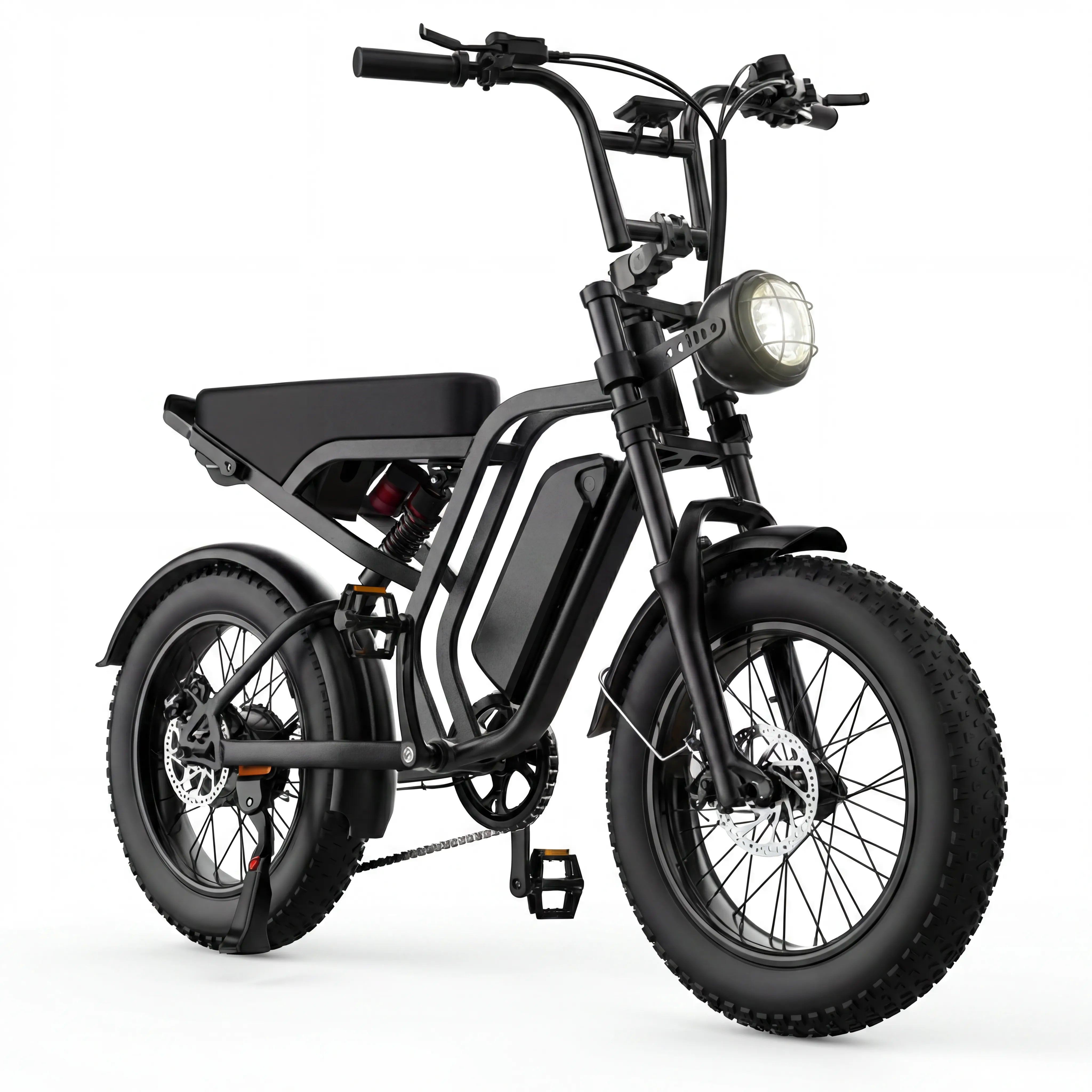
Choosing an e-bike is not only about finding a category that sounds promising. For a heavier rider, the useful comparison starts with fit, control, the trips you actually plan to make, and the current documentation for the exact model. A product label, a photo, or a single number cannot answer every ownership question. A calm, repeatable check gives you a better basis for deciding whether to keep considering a bike.
Begin by defining the job. Is the bike for short errands, a commute with frequent stops, relaxed rides on paved paths, or a route with rougher sections? Where will it be stored, how will it be moved through doors or gates, and what will you normally carry? Those details shape a useful test ride and reveal which questions need an answer from the seller or the model documentation.
Start with the exact model, not a general promise
Use the current HIEHA e-bike collection to identify the exact configuration you are considering. Then read the current product page and manual for that configuration instead of transferring a claim from a different model, an old listing, or a social post. Product pages can change, and two bikes that look similar may have different components, included accessories, or guidance.
For example, the HIEHA SU8 1.0 product page is the appropriate place to confirm the model information that is current when you are shopping. Treat documentation as a starting point for questions, not a replacement for fit. If a detail affects safety, suitability, or an accessory choice, ask for the current written guidance before relying on it.
Avoid reducing the decision to an advertised capacity figure. A complete decision also depends on rider position, tire condition and pressure guidance, route surface, cargo, maintenance, and how confidently you can operate the controls. If you need a model-specific recommendation, request it from HIEHA support with the exact model and intended use rather than assuming one general answer applies to every configuration.
Check fit before comparing feature lists
Fit is practical: can you mount and dismount without rushing, place your hands naturally on the controls, look ahead with a relaxed posture, and reach the brakes without strain? Wear the shoes and outer layer you would realistically ride in. If you expect to carry a backpack, bring it to the test ride. Small changes in clothing and cargo can change reach, balance, and how easily you move the bike at a stop.
Ask to adjust only what the current instructions say is adjustable. Do not make improvised changes to a seat, handlebar, or component during a short test. A retailer or support team can explain the model-specific adjustment range and any setup steps that need professional attention. The goal is not to make a quick ride feel perfect; it is to learn whether the basic position and controls give you a sensible starting point.
| Question to test | What to observe | What to confirm in writing |
|---|---|---|
| Mounting and stopping | Whether you can start, stop, and step off deliberately in a low-traffic area. | Any model-specific setup or adjustment guidance. |
| Control reach | Whether you can use brakes, display, and assist controls without losing attention on the route. | Current manual and support instructions for the exact configuration. |
| Everyday carry | How a realistic bag, lock, or layer affects your movement and parking routine. | Accessory compatibility and installation guidance. |
| Storage and service | Whether you can move and secure the bike where it will live. | Charging, care, and service contacts for questions that remain. |
Make the test ride repeatable
A short loop is more useful when it is the same for every finalist. Include a normal start, a gentle turn, a controlled stop, a section of your usual pavement, and the kind of parking or walking maneuver you expect to make regularly. Start at a conservative setting and leave extra space. The point is to see whether your movements feel deliberate, not to test a limit or prove a performance claim.
HIEHA’s e-bike test-ride checklist can help you turn the ride into observations about fit, braking comfort, controls, and route confidence. Write down what happened right after each ride. “I could stop and restart comfortably at this intersection” is a useful observation. “This bike will work in every condition” is a prediction a short ride cannot establish.
Keep the surface appropriate to your experience and the intended use. If a regular route includes hills or changing pavement, make that a separate question rather than assuming the category name supplies the answer. The route-first hills guide offers a way to record distance, restart points, and surface changes without turning a general shopping guide into a promise about a particular climb.
Include the whole ownership routine
A good fit on a five-minute ride is only one part of ownership. Walk through the beginning and end of a normal trip. Can you take the bike from storage to the street without an awkward turn? Where will you keep a lock, bag, or weather layer? What happens when you arrive tired, need to park, or need to move the bike a short distance by hand? These everyday transitions often determine whether a bike fits your routine.
Also plan for support before you need it. Locate the manual, setup guidance, maintenance information, and the contact route for a question about fit, charging, parts, or accessories. The current HIEHA Electric Bike FAQ is a useful general starting point; use direct support when a question is specific to a model or could affect safe use. Written guidance is easier to check again than a detail remembered from a showroom conversation.
If you are comparing a commuter-oriented route with one that has more varied surfaces, keep the route discussion separate from the fit discussion. The commuter versus all-terrain e-bike comparison can help you list surfaces, stops, carrying needs, and rough sections. Combine that list with your fit notes rather than letting one feature decide the whole purchase.
Finish with clear questions and a decision record
Before buying, make a short record for each bike: the model and configuration checked, the route used, what felt comfortable, what felt uncertain, and the documentation you still need. Bring that record to a follow-up conversation. It turns a broad request for “the best bike” into questions someone can answer accurately: which accessory fits this configuration, where is the current setup guidance, and what should I verify before using it on my normal route?
The right outcome is not a universal ranking. It is a bike whose fit, controls, storage plan, intended route, and support information make sense for you after a careful comparison. Take the time to test deliberately, verify the current documentation, and pause when a question needs a model-specific answer. That approach is more useful—and more durable—than treating a single claim as the whole decision.
Share:
Commuter vs. All-Terrain E-Bikes: Match the Bike to Your Route
E-Bike Flat Tire: A Calm Roadside Checklist