
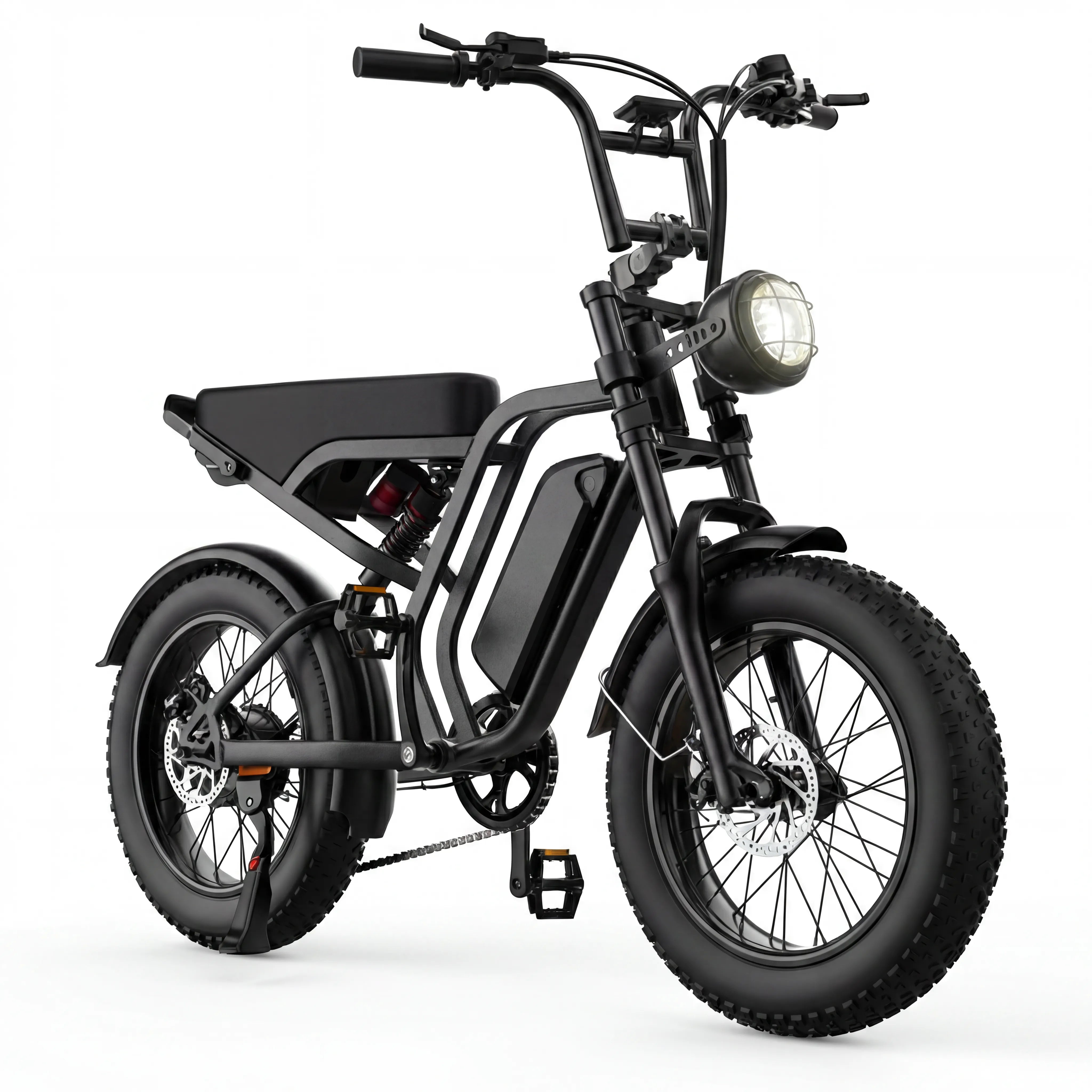
“Commuter” and “all-terrain” describe the routes an e-bike is meant to make easier, not two fixed levels of quality. A commuter-oriented setup is usually evaluated around repeated pavement, predictable starts and stops, storage, and everyday carry needs. An all-terrain-oriented setup is evaluated around a wider mix of surfaces, comfort over rough patches, and control when the route is less uniform. The useful choice is the category that fits the miles you actually expect to ride most often.
Start with your route before comparing a feature list. Write down the surface you use on an ordinary weekday, the roughest section you cannot avoid, how often you carry a bag, where you store the bike, and whether the ride includes frequent intersections or longer open stretches. Then test the same questions on every bike you consider. That makes a comparison more useful than assuming one category is right for every rider.
Begin with the route, not the label
A mostly paved trip with bike lanes, neighborhood streets, and short errands asks for a different routine from a trip that regularly includes broken pavement, gravel connectors, park paths, or uneven driveways. Neither route needs a dramatic description to matter. A few rough blocks can influence comfort and control, while a long smooth commute can make easy starts, predictable braking, and convenient parking the everyday priorities.
Make a simple route inventory for a normal week. Include the distance, surface changes, traffic stops, hills, weather exposure, cargo, and where the bike will live. If your answer changes by day, use the route you ride most, then note the occasional route separately. A bike should be judged on its primary job first; a rare weekend surface should not quietly become the whole buying decision.
HIEHA’s e-bike commute-planning guide can help turn a vague commute into a list of practical questions. Use it to map starts, stops, charging access, and secure storage. For the available category and current model information, begin with the HIEHA e-bike collection rather than relying on an old listing, a photo, or another rider’s configuration.
| Route question | Commuter-oriented focus | All-terrain-oriented focus |
|---|---|---|
| What surface appears most days? | Predictable pavement, paths, curbs, and intersections. | A deliberate mix of pavement and rougher, uneven, or loose surfaces. |
| What happens at low speed? | Frequent starts, turns, parking, and walking the bike. | Slow control before and after changing surfaces or grades. |
| What should the test ride include? | Your usual stops, a tight turn, and a realistic carry setup. | The same basics plus the representative surface change you expect to ride. |
| What must be confirmed? | Fit, storage, lights, controls, accessories, and documentation. | Fit, control, tire and suspension guidance, route limits, and documentation. |
Look at your everyday routine
Commuting is often a sequence of small tasks: leave home, cross an intersection, stop at a store, carry a lock or bag, park, and repeat the trip later when you are tired. In that setting, a useful test focuses on mounting, reach to the controls, low-speed steering, braking feel, and how the bike fits your storage plan. Bring the backpack, work shoes, or rain layer you would normally use, because those details can change the experience more than an isolated specification.
An all-terrain route still includes these basics. The difference is that the surface may vary more, so your assessment should include how steadily you can look ahead, steer, and make controlled stops when the pavement changes. That is not a reason to turn a first ride into a difficult trail test. Start in a low-traffic area at a conservative setting, learn the controls, and ask for the exact model’s setup guidance before attempting terrain that is new to you.
For either category, consider the end of the trip. Can you move the bike into the place where it will be stored? Is the route to that spot narrow, stepped, or shared with other people? Can you charge according to the current model documentation? These questions make the comparison about the full ownership routine, not just the most enjoyable five minutes of a demo ride.
Separate comfort from capability
Comfort is personal and route-specific. A wider tire, suspension, riding position, saddle shape, and tire setup can all affect how a route feels, but a feature list does not guarantee the same result for every rider or surface. Use your test ride to notice whether you can keep a relaxed grip, look where you are going, and make a repeatable stop. If the setup feels unfamiliar, pause and ask for help instead of assuming that discomfort is proof that the category is wrong.
It also helps to separate tire questions from the broader route question. HIEHA’s fat-tire versus regular-tire guide covers that narrower tradeoff. This article uses a wider lens: the surface, the frequency of stops, what you carry, the control you need, and the support information you can verify. Tires are one input, not a substitute for checking the complete route.
If regular hills are part of either route, make them a separate test item. Use the route-first questions in HIEHA’s guide to choosing an e-bike for hills to record the grade, distance, restart points, and surfaces involved. Do not turn a general category label into a promise about performance on a particular hill. Current model documentation and a controlled test on an appropriate route are more useful than a broad claim.
Compare controls, carry needs, and support
Before riding, ask the demonstrator to show you the power control, display, assist adjustments, gears, lights, and braking controls. Practice a few starts and stops at a low setting. The goal is not to chase a speed number; it is to learn whether you can make small changes deliberately while continuing to watch the route. A category comparison is incomplete if you never check the controls you will use every day.
Then check your carrying plan. A commuter may need room for a lock, change of clothes, laptop, or groceries. A varied-surface rider may need a different mix of layers, tools, or water. Take only the items that are realistic for a test ride, and ask which accessories fit the exact configuration. The HIEHA SU8 1.0 product page is a place to confirm current model-specific features, included items, and documentation. Do not transfer a claim, an accessory, or an image from one model to another.
Support questions deserve the same attention as ride questions. Ask where the manual, setup instructions, maintenance guidance, and compatibility information are located. For general help, review the current HIEHA Electric Bike FAQ; use direct support for a question that affects safety, fit, charging, or a specific part. Written guidance is easier to revisit than a detail remembered from a showroom conversation.
Use one repeatable test loop
A short, repeatable loop makes the comparison fairer. Include a normal start, a gentle turn, a controlled stop, a section of your usual pavement, and—only if it is part of your intended use—a representative surface change. Ride the same loop on each finalist, in similar clothing and with the same carry item. Make notes immediately afterward about fit, reach, low-speed behavior, braking comfort, and what you still need to verify.
Keep observations and claims separate. “I could operate the controls without looking down for long” is an observation. “This bike will handle every rough surface I encounter” is a prediction that a short test cannot prove. The distinction helps you ask more useful follow-up questions and avoids treating a label as a guarantee.
Finish with a small decision record: the route used, the conditions, what felt clear, what needs documentation, and the one concern you would want resolved before buying. That record gives both commuter-oriented and all-terrain-oriented bikes a fair, route-based review. The category that fits your repeated trips, your confidence, and the verified information available for the exact configuration is the one worth considering further.
Share:
How to Test Ride an E-Bike: A Practical Checklist
How to Choose an E-Bike for a Heavier Rider: Fit and Support Questions