
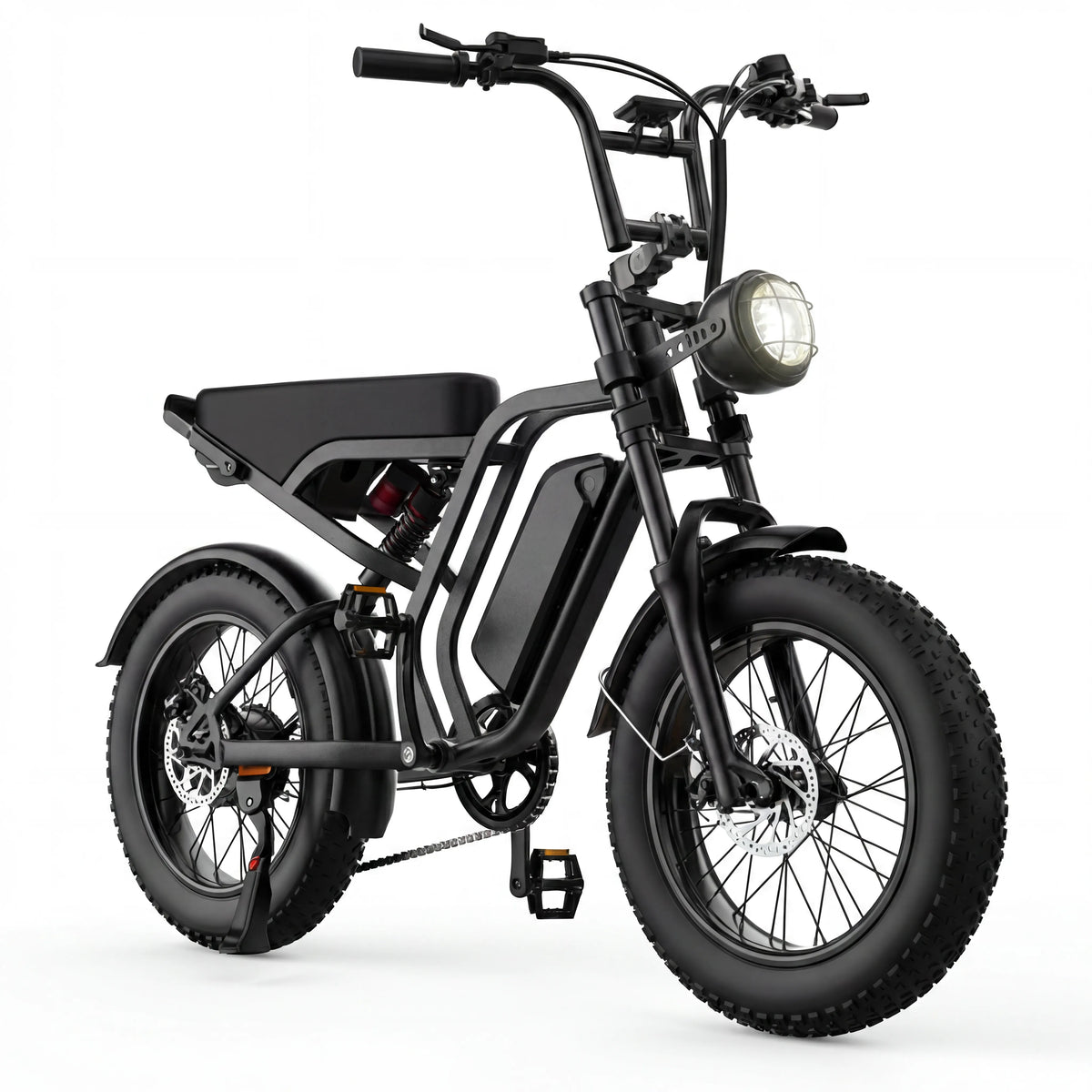
Walking an e-bike is part of owning one. You may guide it through a doorway, beside a curb, into a parking space, across a quiet plaza, or back from a stop where riding is not appropriate. Those moments do not need to feel complicated, but they deserve the same calm attention as the start of a ride. A simple hand-guiding routine helps you notice a narrow turn, loose item, uneven surface, or awkward position before it becomes a rushed problem.
This is a model-neutral checklist, not a statement about the weight, walk-assist behavior, or components of a particular e-bike. Start with the HIEHA e-bike collection when you need current details for a specific model. If the bike feels unfamiliar, the path is crowded, or you are uncertain about a control, stop and make the situation simpler rather than forcing the move.
Pause before you start walking
Before moving the bike, take one second to look at the route immediately around you. Notice the direction of travel, the first turn, changes in surface, pedestrians, doors, bollards, ramps, and anything that narrows the available space. This is not about mapping a whole journey on foot. It is about avoiding a surprise in the first few steps. A clear plan may be as simple as deciding which side of the bike you will stand on and where you will stop if another person needs to pass.
Check that your own clothing and carried items are settled. A loose bag strap, lanyard, jacket sleeve, or shopping bag can be more distracting while walking beside the bike than while standing still. If you brought everyday gear, use the same deliberate approach described in the e-bike cargo checklist: close small items inside something secure and keep anything loose away from pedals, wheels, and controls.
Choose a position that gives you room
Stand where you can hold the bike steadily without leaning across a moving wheel or pulling a handlebar toward someone else. The useful position depends on the path and the bike, so there is no universal side that is right every time. What matters is that you can see where the front wheel is going, reach the controls you understand, and step away cleanly if you need to pause.
Before taking the first step, turn the handlebar a small amount and notice whether a cable, bag, lock, or accessory is caught. Look at the ground near the pedals and wheels as well. A bike can seem settled until it is angled toward a doorway or ramp. If the path requires a very tight turn, stop before the turn and consider whether a wider approach, a second person, or a different route would make the move more controlled.
Keep your walking pace unhurried
Move at a pace that lets you observe the bike instead of reacting to it. There is no advantage in rushing the first few feet to keep up with a friend, clear a parking area, or finish an errand quickly. If a wheel catches a crack, the bike begins to lean, or someone steps into your path, a slow pace gives you more time to stop without tugging or twisting the bike.
Use short, direct movements around obstacles. When approaching a curb cut, threshold, or uneven pavement, look at where each wheel will travel rather than focusing only on the destination. If you cannot see the surface well enough, pause and reposition. Do not try to wrestle the bike over an obstacle based on an assumption about clearance or weight. The exact bike documentation is the right source when a component-specific question remains.
Make turns in stages when space is tight
A narrow doorway, elevator, storage area, or bike room can make a normal turn feel different. Break the move into stages: stop before the turn, look through the opening, turn a little, then reassess. This avoids having to correct a large lean or back up quickly with someone close behind you. If a door is heavy, a ramp is slick, or the turn forces you into an awkward position, wait for help or choose another route.
Keep the handlebars and nearby controls clear as you turn. Nothing should press against a lever, twist around the grip, or pull the bike unexpectedly. The same habit applies when starting a ride: the before-riding brake check is a separate routine, but it is a helpful reminder that a clear control area matters before every normal movement of the bike.
Use slopes and ramps conservatively
Ramps and sloped pavement deserve a separate pause because the bike may want to move before you are ready. Look for loose gravel, wet leaves, standing water, drainage edges, or people entering from the side. Choose the most controlled route available and keep enough room that you can stop. If a slope feels beyond what you can guide comfortably, do not turn it into a test of strength or confidence. A different entrance, a safer place to pause, or assistance is a better decision.
Avoid standing directly downhill from a bike if that leaves you with nowhere to step. Instead, use a position that lets you keep the bike close and see its path. Exact handling varies by model, surface, and load, so this article does not prescribe a technique for every slope. The point is simpler: identify the direction the bike could move, clear your route, and do not continue when you cannot keep the situation deliberate.
Park with the next move in mind
When you reach a stop, do not end the routine the instant the bike is stationary. Leave it where it does not block a doorway, path, ramp, or another person’s access. Before walking away, check that bags, locks, and personal items are accounted for. The e-bike locking checklist can help you finish an everyday stop with a consistent security routine, without making promises about theft prevention or a particular lock.
Think about the departure as well. A parking position that seems convenient on arrival may be awkward when you need to reverse out around another bike, open a door, or guide the bike toward traffic. Leave yourself space to stand beside it and take the same first look at the route when you return. A small adjustment now can make the next start less rushed.
Practice the routine in a low-stress place
If you are new to an e-bike, practice guiding it in an open, quiet location before a crowded commute or event. Try a controlled start, stop, wide turn, narrow turn, and a short section of ordinary pavement. The goal is to learn where you need more space and which positions feel calm, not to prove that you can manage every situation immediately. The test-ride checklist uses the same principle: change one condition at a time and give yourself a comfortable way to stop.
Fit can also affect how naturally you manage the bike at a standstill. If you find yourself reaching, leaning, or feeling unable to place your feet where you expect, revisit the general observations in the e-bike saddle-height checklist. It is not a substitute for model-specific setup instructions, but it can help you notice a question worth resolving before you depend on a busy environment.
Know when to stop and reset
Stop and reset if you lose a clear view of the path, an item begins to move, the bike leans farther than you expected, or the space becomes crowded. There is no penalty for stepping aside, putting the bike in a stable place, and waiting for the path to clear. Do not try to fix a bag, phone, cable, or lock while the bike is rolling. Finish the movement first, then make the adjustment in a place where you can give it full attention.
A practical walking routine is modest: look at the next few steps, clear loose items, choose a position with room, move slowly, take tight turns in stages, and pause whenever the surface or space becomes uncertain. These choices do not depend on a claimed specification. They make ordinary movements around an e-bike easier to repeat with care.
Before rolling back onto a crowded shared route, this e-bike shared-path etiquette checklist offers a calm reminder to match speed and passing choices to the people around you.
Share:
E-Bike Cargo Checklist: Carry Everyday Items More Carefully
Low-Light E-Bike Checklist: Prepare for Dusk and Night Rides